
How Much Does it Cost to go to Hong Kong?
While prices have inched up, Hong Kong remains surprisingly accessible for visitors. Hong Kong is vibrant, multicultural, and endlessly dynamic. For anyone visiting Asia for the first time, it’s an ideal introduction: a major international hub where English is widely spoken and navigating the city is effortless.
So what should you budget for a trip to Hong Kong? The answer really depends on your travel style. Luxury travellers can easily spend more in a single night than most people do over several days, while budget‑minded visitors will find plenty of ways to stretch their dollars. The estimates below are geared toward the average traveller and should give you a realistic sense of what to expect.
| Expenses | Estimated cost |
|---|---|
| Airfare | $1,000 |
| Accommodations | $1,200 |
| Transportation | $100 |
| Food & Drink | $350 |
| Attractions | $200 |
| Random spending | $100 |
The above estimate is for a seven-night stay in U.S. dollars. If you want to know what the cost is in your home currency, go to xe.com and do the conversion. My estimate is also for a single traveller, so if you’re travelling with someone, double all your costs except for hotels.
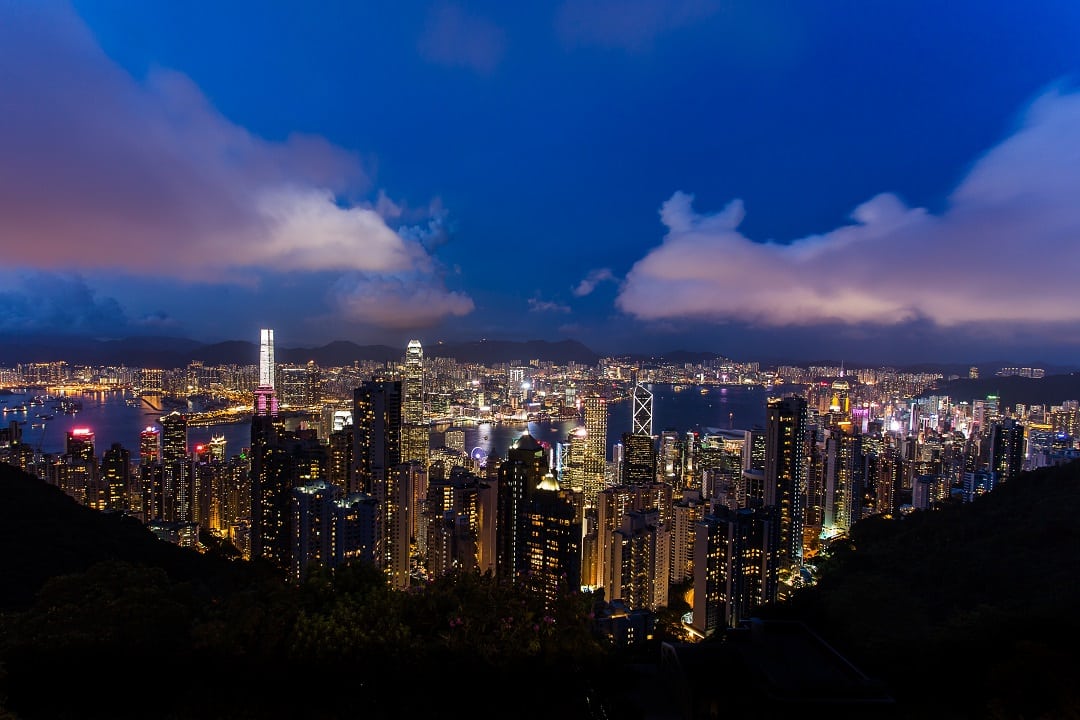
Airfare
Even though Hong Kong is one of the world’s major international hubs, it can be a relatively pricey destination. As a rough benchmark, travellers from North America or Europe should budget around $1,000 for airfare. Those flying from within Asia or the Middle East will typically see lower fares.
Cheaper flights do pop up, but overall prices have risen since the pandemic.
Cathay Pacific is the city’s flagship carrier, though nearly every major airline serves Hong Kong. Once you land, you can take the Airport Express train into the city, but depending on where you’re staying, the bus might actually be more convenient. It’s worth checking with your hotel or host to figure out the easiest option.
Accommodations
Your accommodation costs will largely depend on your travel style. On average, mid‑range hotels in Hong Kong’s most popular neighbourhoods run about $200 per night. If you’re open to staying a bit farther out – areas like Sham Shui Po or North Point – you can often find better deals.
I tend to prefer staying on the mainland rather than Hong Kong Island; there’s just more character and everyday life to soak in. For a one‑week stay, budgeting around $1,200 for hotels is a realistic estimate.
Budget hotels
Hong Kong has no shortage of budget‑friendly hotels. While rooms tend to be compact, you can still count on a clean, comfortable place to sleep. As expected, the most popular neighbourhoods come with higher price tags, but staying a bit farther out can save you a meaningful amount and give you more space. Just be sure you’re close to an MTR station so getting around stays easy.
Recommendations: The Salisbury – YMCA, Mia Casa Hotel, Hilton Garden Inn Hong Kong Mongkok
Mid-Range hotels
Hong Kong has a surprisingly strong selection of mid‑range hotels, many of which fall in the $150–$200 per‑night range. As expected, prices drop the farther you stay from the city’s core. If you’re choosing a hotel in one of the outer neighbourhoods, just make sure it’s close to an MTR station so getting around stays easy.
Recommendations: Holiday Inn Express Mongkok, The Cityview, Eaton, Hong Kong
Luxury hotels
Hong Kong is packed with luxury hotels, and if you’re ready to splurge, the city delivers in every way. Expect prices to be at least double – often far more – than mid‑range properties, but the elevated service and amenities reflect the premium. That said, when I’ve stayed at luxury proerpties in Hong Kong, I’ve never truly felt pampered so I question the price tag.
Recommendations: Island Shangri-La Hong Kong, The Peninsula Hong Kong, JW Marriott Hotel
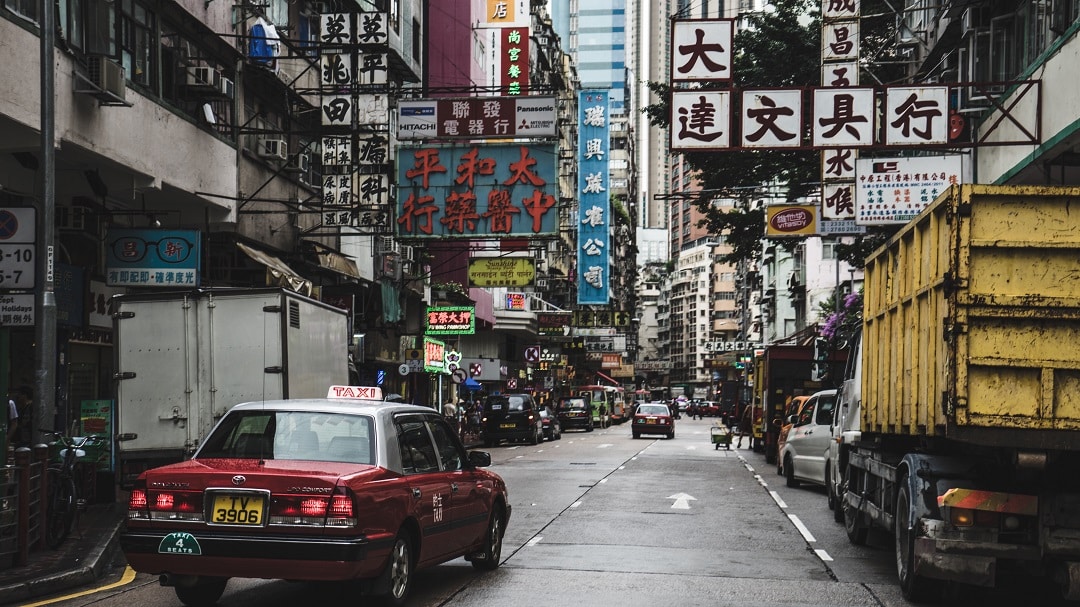
Local Transportation
Hong Kong has one of the most efficient transportation networks in the world, and it’s incredibly easy to get around. English is widely spoken (with the occasional exception among taxi drivers), and nearly all signage appears in both English and Chinese. I’ve budgeted about $100 for local transportation – slightly on the high side, but that includes a day trip to Macau and the possibility of taking a taxi once or twice.
The city’s main transit options include the MTR (metro), buses, minibuses, and the iconic Star Ferry. There’s also an Airport Express train you may use when you arrive. All of these can be paid for with a reloadable Octopus card, which you can purchase at the airport, any MTR station, or most convenience stores – where you can also use it to buy snacks or essentials. The same card works in Macau and Shenzhen as well.
Transit fares are distance‑based but generally very affordable. Most MTR rides within Hong Kong cost between $1 and $2.50. Even a cross‑border train ride to Shenzhen – yes, another country – comes in at around $9.
Buses tend to be slightly cheaper, but for most visitors, the MTR is the fastest and easiest way to get around. Minibuses are everywhere too, but they’re less intuitive for tourists since routes and stops can be tricky to follow.

Attractions
Hong Kong offers a wide range of attractions at various price points, so it’s smart to set aside about $200 for activities. Most travellers end up doing two or three paid attractions, but costs can climb quickly if you pack in more.
Some of the most popular options include:
- The Peak
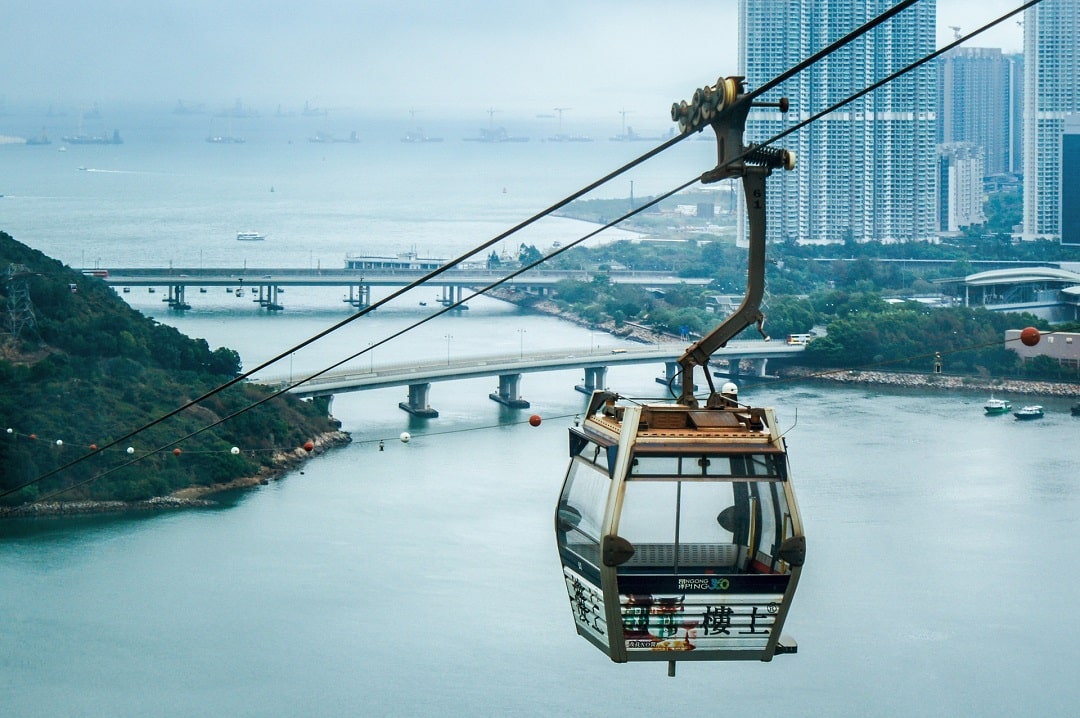
- Ngong Ping 360
- Hong Kong Disneyland
- Ocean Park
- Macau day trip
- Happy Valley Racecourse
If you’re choosing between the theme parks, I’d lean toward Ocean Park—it’s the more well‑rounded experience. That said, Disney fans will always choose Disneyland, no matter what anyone recommends. The Peak Tram is absolutely worth doing, and a visit to Macau is a fantastic add‑on.
Ngong Ping 360 is a scenic gondola ride that takes you over the bay to the Big Buddha in about 20 minutes, but it’s on the pricier side. If you want to save money, take bus #23 from Tung Chung Town Centre instead. It’s only HK$18 one way and takes about 45 minutes.
As for the rest of Hong Kong’s highlights – Avenue of Stars, the Symphony of Lights, local markets, temples, outlying islands, and more – they’re completely free. A lot of what makes Hong Kong special doesn’t cost anything at all.
Food and drink
How much you spend on food each day will vary, but here’s a realistic look at average meal prices, including a drink:
- Breakfast – $10
- Lunch – $15
- Dinner – $20
Note that these prices are based on quick service restaurants or takeaway meals. Think noodle bars, bakeries, or Hong Kong style cafes. If you’re going to more formal restaurants, you could easily pay three times more.
Hong Kong can be incredibly affordable when it comes to food, though there are plenty of high‑end restaurants if you prefer something more upscale. A simple breakfast – think a baked bun or noodles with a drink – will come in around $7. Lunch for about $15 is easy to find at a dai pai dong (street stall) or a takeaway dim sum shop, usually with a drink included. Dinner at $20 is a fair estimate, though you’ll find both cheaper and pricier options depending on the day.
You’ll also find yourself snacking more than expected – street food stalls and drink stands are everywhere. Instead of budgeting meal by meal, setting aside about $50 per day for food is a more realistic approach.
Random spending
How much you spend on shopping is entirely personal, but I always budget at least $100 here. If you love to shop, you’ll naturally spend more, but even if you don’t, Hong Kong has a way of convincing you to open your wallet.
The markets may be classic tourist traps, yet I still manage to walk away with something every time. And with so many malls – each one practically a sightseeing stop on its own – it’s almost impossible not to pick up a few extras.
Note that popular brands such as Muji and Uniqlo are significantly cheaper in Asia compared to North America.
Final thoughts
So how much does a trip to Hong Kong really cost? Based on these estimates, budgeting around US $3,150 is a realistic target. It’s a fair price for experiencing one of the world’s most exciting cities – and honestly, a little splurging goes a long way here. You can trim costs by cutting back in certain areas, but that often means missing out, and in a place like Hong Kong, that trade‑off just isn’t worth it.
For more inspiration, check out my guides to Bali, the Maldives, Dubai, Tokyo, Singapore, Malaysia, Thailand and Southeast Asia.
Is Hong Kong expensive to visit?
Hong Kong is one of the most expensive cities to live in, but if you’re a tourist, it’s actually not too bad. There are many hotel options, so it shouldn’t be hard to find something within your budget. Food is pretty cheap, and the city has some of the cheapest Michelin-star restaurants in the world. As for attractions, a lot of the stuff is free, so you don’t need to spend a fortune.
Is Hong Kong cheaper than America?
If you read my guides on New York, Orlando, Boston, and Chicago, you’ll quickly realize that Hong Kong is cheaper than America. That said, depending on where you’re flying from, the airfare could cost you quite a bit. Overall, you need to think about what kind of vacation you want. Hong Kong is very different compared to American cities.
How much is a meal in Hong Kong?
This will obviously vary depending on where you eat, but 80 Hong Kong Dollars (US $12) will get you a decent meal at take out places and street markets. Make no mistake, this is some of the best food you’ll find in Hong Kong. I’m talking about stir fried noodles, fried rice, soup noodles and more. Even if you go into a quick service restaurant, you might not pay much more for a meal. That said, Hong Kong also has a lot of nicer restaurants where you should expect to spend more.

[…] for being the cheapest Michelin starred restaurant in the world; a perfect pick for those who are visiting Hong Kong on a budget. Their pork buns are the real winner; getting rave reviews by every critic and foodie who tries them. […]
With that estimated final cost of $2700 Canadian dollars, it already includes about going to Disney land?
Jhonalyn,
My estimate for attractions is $100, if you were to go to all the attractions I suggested, you’d likely have to budget another $150
[…] major tourist areas such as Beijing, Shanghai and Seoul. A tip of 10% at restaurants in Thailand, Hong Kong, and Vietnam are typical, but if a service charge is added, there’s no need to tip anything […]
[…] are no crazy cheap prices but Hong Kong for less than $1,000 and Shanghai under $900 are pretty good. Heck, Beijing for less than $800 is a […]
I’d recommend attending a concert at the Hong Kong Coliseum even if you don’t listen to cantonese music. HK concerts performed by its top singers are world class, and the most popular ones can hold 10+ shows, even 20+. The more shows they perform, the higher the budget they’ll put back into the shows. Check out YouTube clips of Eason Chan or Joey Yung’s concerts. https://youtu.be/pOiWYM4bVYo